Community Development Lab
Belfast · 6th May 2026
Founder edition
A Founder-Led Reading of Northern Ireland's Startup Economy // Vol. 01

State of the
Startup
Nation.

Northern Ireland's founder economy, and the case for treating it as economic policy.
GDP as Mission Founder-Led Evidence-Based Optimistic
The room — eight tables in conversation
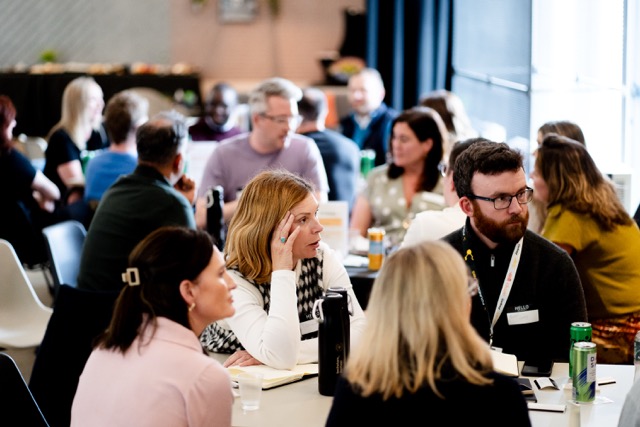
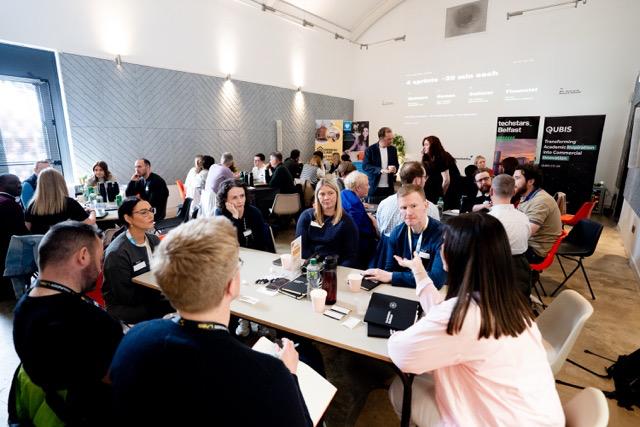
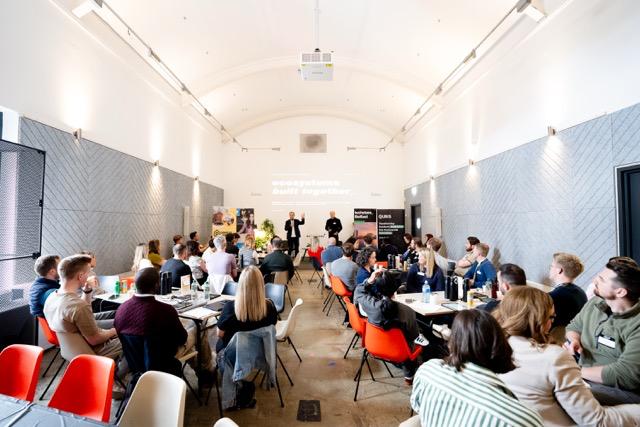
6th May 2026The room. Eight tables. Fifty-odd people from five stakeholder groups, four hours.
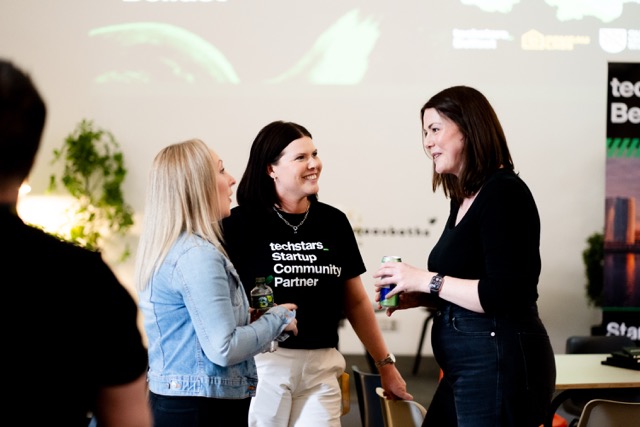
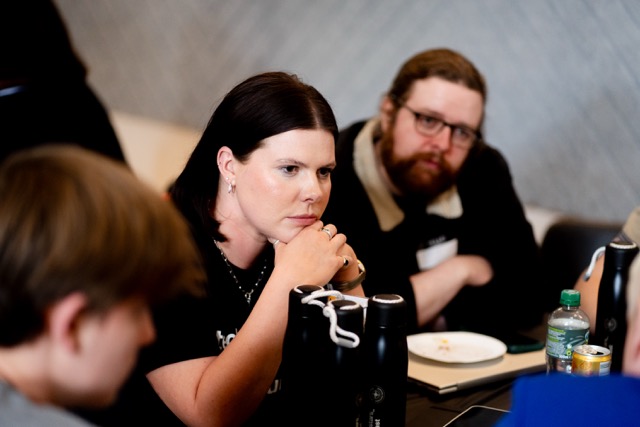
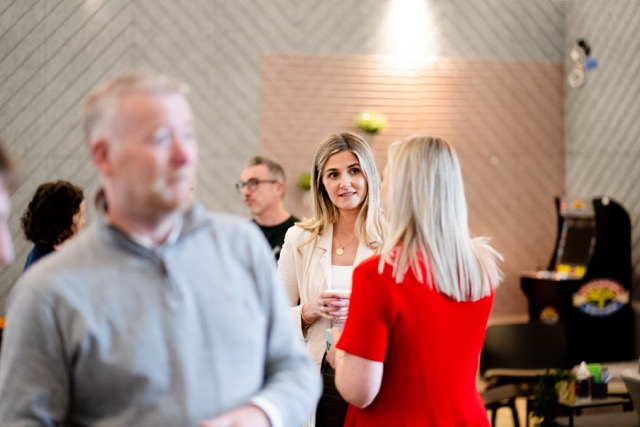
Founder mid-conversation, the honest room
Techstars Belfast notebooks
"In better shape than its founders usually realise. In worse shape than its institutions believe."
— Editorial · State of the Startup Nation
The Founder Edition
+ Where This Goes If It Works
Techstars Belfast
techstarsFounder edition · Belfast, Honestly
Contents & Editorial
By Ian Browne · for founders

A founder's report on the state of the startup nation in Northern Ireland.

On 6th May 2026 we ran the Techstars Belfast Community Development Lab at Ormeau Labs. Fifty-odd people. Founders, investors, programme operators, government, universities, major corporations, a couple of angels. Eight tables. Four themed sprints. Granola transcribed every conversation.

The transcripts are anonymised. The quotes are verbatim. What founders said in that room is not always what the institutional conversation about Northern Ireland's startup economy currently says, and the gap is itself the most useful finding in the document.

This is a starting point. What matters is what we do next.

A note on voice

This is written in one voice. It is the one I have. It is not the only voice the founder economy needs. The founders quoted in this report are more diverse than the voice writing it. Read them as the chorus and me as the narrator.

What this report is not
  • A policy submission.
  • A critique of any single agency.
  • A balanced view in the BBC sense.
  • The only voice the founder economy needs.

It is a field report from your peers. Use it accordingly.

State of the Startup Nation · Founder edition
02
techstarsSection 01 · The Seven Capitals
The analytical anchor
01
The Seven Capitals · what the room covered, and what it didn't
framework: Feld & Hathaway · The Startup Community Way (2020)

This page sits inside the report as the analytical anchor. The framework is Brad Feld and Ian Hathaway's The Startup Community Way, Techstars' own canon. We use it because it disciplines the analysis and forces us to be honest about what the room talked about and what it didn't. The 6th May lab ran four themed sprints across eight tables. Five capitals were the subject of the conversation. Two were not. We simply didn't have time.

TECHSTARS BELFAST · STATE OF THE STARTUP NATION · MAY 2026 The Seven Capitals What the room covered, and what it didn't. Framework: Brad Feld & Ian Hathaway · The Startup Community Way (2020) FIVE CAPITALS · WHAT THE ROOM COVERED Four themed sprints · load-bearing evidence 01 NETWORK STRONGEST · ONE GAP Connectedness, relationships, bondedness. "You're never more than one person away from the right person." 02 FINANCIAL CEILING · GRANTS · ANGELS Revenue, debt, equity, grants. "My ambition is almost not to raise money through the local funds." 03 CULTURAL AMBITION · INCLUSIVENESS Attitudes, mindset, behaviours, inclusiveness. "I'm not going to find out here." — on the ambition trap 04 TECHNOLOGY FORWARD-POINTING The technology shift founders are operating inside: the AI conversation. "We're trying to be as close to AI-native as possible." 05 INSTITUTIONAL POLICY · COORDINATION Functioning public sector, markets, stability. "How do I tell which programmes are good and which are relevant?" TWO CAPITALS · NOT YET COVERED Not because they don't matter. We ran out of time 06 INTELLECTUAL Ideas, information, technologies, stories. Universities, spinouts, deep-tech, IP commercialisation touched on, never the subject of a sprint. 07 PHYSICAL Density, quality of place, infrastructure. Belfast density mentioned in passing. No conversation on regional spread or AI infrastructure.

What this tells us. The capitals the room covered (network, financial, cultural, technology / AI, institutional) are where the urgency sits in the founder economy right now. The areas the room didn't cover in depth (intellectual and physical) need further discussion.

01 · The Seven Capitals
03
techstarsSection 02 · The unanimous bit
What everyone agreed on
02
The room agreed on more than you'd think
five unanimous things · evidence: high

Before the working-through, the easy part. Five things every table converged on:

We're all here with the same intention. We want to make this place better. We want to make it easier to start a company. — The whole room, in different words

Half the room also said versions of "and the system isn't keeping up." Both things are true at the same time. The rest of this report is the working-through.

What follows is the positive parts and the difficult parts, not opposites. Both are honest. Read them in order. They compound when read together.

Fifty-odd people, eight tables, four hours
02 · The room agreed
04
techstarsSection 03 · What's working · 1 of 2
Seven bright spots
03
What's actually working
seven bright spots · use them

You are not building in a broken place. You are building in a place that has not yet learned how good it can be.

3.1   The community is unusually generous

Help is offered here without immediate transactional cost. Warm intros open doors. Coffee meetings are not yet priced. In London this stopped being true around 2018. In Dublin around 2021. In Belfast it is still true, and it is the single most underrated asset you have.

The network is also where this report's most quietly important finding sits: the local network is your unfair advantage and also your trap. Use it for what only it can do: friendship, density, founder-to-founder honesty, warm intros to specific people. Set your benchmarks elsewhere. Generosity without external exposure becomes inward looking. Travel is how you keep one without falling into the other.

3.2   A new generation, more varied than you might think

The most interesting thing about the 6th May room was who was actually in it. Not one founder archetype. Seven, living comfortably side by side:

  • AI-native solo founders working at unprecedented gear.
  • Domain experts leaving long careers to build inside those domains.
  • Parent founders running async, building at sustainable pace.
  • Women founders building in long-underserved sectors: women's health, careers, social infrastructure, climate.
  • Mid-career returners who left employment in their 40s and 50s.
  • Co-founder partnerships, including husband-and-wife teams choosing pace deliberately.
  • Pre-revenue founders building with customer evidence, not capital.

The unit economics have changed. The cohort emerging now is not the previous generation.

3.3   The infrastructure is here

Walkable density between Ormeau Labs, Catalyst, Innovation Centres, Eagle Labs, Ulster and Queen's. A cost base that still meaningfully advantages you against London or Dublin. Talent that stays longer than it would elsewhere. Strong technical graduates from both universities.

The room — five stakeholder groups, four hours
03 · What's working · 1/2
05
techstarsSection 03 · What's working · 2 of 2
Local proof & wins from the room

3.6   There is local proof you don't need to leave

Cloudsmith.
Built in Belfast · Sold globally from day one · Series C from international capital · Did not relocate.
Won by being the global category leader in their niche while based in Northern Ireland. The argument that you can't build something globally significant from here is empirically untrue.

Cloudsmith proves you don't need to relocate. It is also one model, not the only model: global category leader, international capital, software-first, sold to developers worldwide. The four companies below prove you don't need to follow the same shape, either. Different sectors. Different customer types. Different funding patterns. Different speeds. What they share is harder to see than what they don't: a refusal to set the ceiling locally, and a willingness to take the global category seriously from year one.

On the heels of Cloudsmith

Northern Ireland scale-ups quietly approaching the same bracket, in deliberately different shapes.

healthtech

Eolas Medical

Clinical reference platform used by thousands of doctors. Built in Belfast, sold globally into health systems.

healthtech

Axial 3D

3D-printed surgical planning models for hospitals. International customers, Belfast HQ.

fintech / sportstech

Teamfeepay

Payment infrastructure for sports clubs. Bootstrapped scale into UK & international clubs.

B2B SaaS

Scileads

Life-sciences lead intelligence used by global pharma. Belfast-built, profitable, international.

All four built locally. All four sell globally. None of them are Cloudsmith. And that is the point.

Multiple shapes. Different sectors. None relocated. Pick your reference point from this list, not from the company down the road.

The room mid-sprint — eight tables, four themes
03 · What's working · 2/2
06
techstarsSection 04 · Things to be honest about
Structural honesty · contained
04
Things to be honest with yourself about
four diagnoses · same substance, different door

4.1   Most founders here benchmark too low

The good news is the benchmark is reachable from here. Your peer group sets your pace. If everyone around you is running a six-minute mile and clapping, you'll run a six-minute mile and feel like you're winning. Mature ecosystems calibrate against each other. London, Boulder, Dublin and San Francisco watch one another closely. Belfast should do the same. The right reference point is the global category leader in your niche, wherever they happen to be based. Not the founder down the road.

Cloudsmith proved it's reachable without relocating. Eolas, Axial, Teamfeepay, Scileads are doing it in shapes that look nothing like Cloudsmith. Pick whichever proof point fits your business and study them properly.

What you do this week

Pick the global category leader in your niche. Know their unit economics, pricing, hiring pace, churn, distribution. Make them your reference point. If you can't name them, you don't know your category well enough yet.

4.2   Grants are slow money with strings

Founders described becoming "grant monkeys", chasing grants as a substitute for chasing customers. POC grants that won't pay for the £200/month of AI tooling that would actually accelerate you, but will pay for a £100k developer you don't really need. The best founders here are increasingly passing on grants because grants slow forward momentum. That selection effect is itself a comment on the grant regime.

What you do this week

Use small grants tactically for market validation. Stop tailoring your business plan to chase application criteria. The cheapest, fastest, most validating money is a paying customer. More grant money won't fix a customer problem. It will postpone the moment you find out.

4.3   The local capital ceiling is real

NI pre-seed cheques are smaller than Dublin equivalents and meaningfully smaller than London. The deeper problem isn't ratchets or board-seat concessions. It is valuations and a misunderstanding of how angel investment is supposed to work. Founders take small cheques at low valuations from people who don't fully understand startup mechanics, and the cap table ends up broken before the company has had a real chance to scale. A broken cap table is one of the few things that genuinely prevents an otherwise good company from becoming a successful one. Know what you are agreeing to before you sign.

Beneath cheque size sits a more structural issue. Local capital is concentrated in a very small number of investors, and the vehicles that have emerged elsewhere over the last decade haven't formed here. No micro funds. No scout programmes. No operator-backed vehicles. The highest-impact move for an emerging ecosystem is the operator-led talent fund: founder-GPs writing the first £100k cheque into people, not rounds. The angel layer hasn't formed here the way it has elsewhere, and that gap is structural. Talented people sit inside FDI jobs they would leave if the first cheque existed.

What you do this week

Plan for external capital from week one. Build the deck for London, Dublin, New York, or San Francisco. The local funds will see you anyway if you're good. The first offer is rarely the right offer. Run a real process.

4.4   The system around you doesn't have an industrial policy for founders

The structural critique. The instinct when you hit institutional friction is to blame the institution. That is the wrong target. Northern Ireland does not yet have an industrial policy that treats the indigenous founder economy as a serious GDP lever. Every friction founders described is downstream of the same upstream gap: no coordinated economic strategy that treats founders as infrastructure. This is not the agencies' fault. It is the system's fault. Fixing it requires Stormont-level decisions.

What you do about it

Don't take institutional friction personally. Route around what doesn't work. Use what does. And recognise that you, as a founder operating here, are part of the evidence base that forces the upstream conversation to happen. This report is one of the things that forces it.
04 · The structural honesty
07
techstarsSection 05 · Speed & AI
Your structural advantages
05
Speed & AI · your structural advantages
not problems to fix · advantages to use

Two things came up at multiple tables that are not problems to fix. They are advantages to use. Both of them favour you over incumbents.

5.1   Speed is your structural advantage against incumbents

The only competitive advantage a founder has against an incumbent is speed. Quality of life is a real NI advantage and worth preserving. But you are competing with founders elsewhere who do not have offices empty by 4pm.

Be the fast one. Take meetings at 8am if it serves the customer. Reply within the hour when the response matters. Ship the prototype in a week. Make every customer interaction visibly faster than they expect.

What you do this week

Pick one specific customer or investor interaction. Make your response time on it visibly faster than the recipient expects. Do that consistently for a month. Velocity, not capital, is your edge.

5.2   AI is your structural advantage against larger competitors

Founders already using AI properly are operating at a different gear. Founders treating AI as a sticker are losing. The difference is whether you are using it to do work, or to look like you are doing work.

The room produced honest scepticism worth preserving. The hype cycle is real. The capability frontier moves faster than the commentary about it. Plenty of products marketed as AI are thin wrappers around an API call. None of that changes the underlying point for a founder. Used properly, AI lets one person do the work a team used to do. That is a structural advantage whether the wider market is overhyped or not.

If you are a domain expert, your moat is your knowledge, plus AI, plus speed. None of the three works without the other two.

What you do this week

Pick one workflow that previously needed a team: sales research, customer interviewing, design assets, copy, financial modelling. Automate it this week. Use the saved time for more customer conversations. Treat AI as how you run the company, not what the company does.
Founders mid-discussion — velocity in practice
05 · Speed & AI
08
techstarsSection 06 · Tactics
Six categories · pick at least one each
06
What you can actually do this week
tactics, not policy · pick at least one from each

These actions are deliberately maximalist. Adapt them to where you actually are. The point is direction, not literal prescription. Some of them, particularly travel, are unevenly available depending on your circumstances. That's true. It's also the reality of the market you're competing in. Read the list with both eyes open.

Capital & fundraising

  • Decide early whether you actually need external capital. If you do, plan for it from week one and assume it comes from outside Northern Ireland. If you don't, don't pretend you do.
  • Build a target list of 40 qualified investors before you start raising: stage fit, sector fit, geography fit. Stack-rank them.
  • Take the investor calls that matter. Skip the ones that don't. If a VC wants coffee but isn't going to invest, send a quarterly update instead of giving up an hour.
  • Get a term sheet reviewed by someone who has signed one before. Two hours of an experienced founder's time is the cheapest insurance you'll ever buy. Pay particular attention to valuation and the resulting cap table. A broken cap table is one of the few things that prevents an otherwise good company from succeeding.
  • Apply for SEIS assurance early if you're UK-incorporated. The Republic equivalent if you're cross-border.
  • Don't max out grants just because you can. Match the grant to the actual work.
  • If a customer offers to pay for an MVP, take the money. Customer cash is the cheapest cash you'll ever raise.

Customers & traction

  • Run real customer interviews until you can finish your customer's sentences. Record them. Transcribe them. The quotes are also your fundraising deck.
  • Get structured feedback from every single customer call. The pattern is more useful than any individual answer.
  • Ask the question most founders avoid: "why will my startup fail?" Listen to the honest answers and thank the people who give them.
  • Charge for the MVP. Waitlist conversion is rarely what you think it is.
  • Founder-led sales until you can write the playbook. Then hire.
  • Don't delegate customer engagement, even after you raise. It pays the bills and it informs the product roadmap.
  • Go to events. It's a small place. That's an advantage. If a sector-specific event for your vertical doesn't exist, set one up. Techstars Belfast will partner and help where we can.

Network

  • Find the second- and third-time founders in the room. Stay close.
  • Pay back every warm intro within a week with a status update.
  • Ask for the named person, not the category. Lazy "introduce me to your investors" doesn't compound.
  • Build a small circle of four founders you trust. Then four more.
  • When you raise, introduce two founders behind you on the day you announce.
  • Travel regularly, not occasionally. Make it cadence, not a one off quarterly trip.

Ambition & pace

  • Get on a plane. London, Dublin, New York, or San Francisco. This quarter.
  • Pick the global category leader in your niche. Study them properly.
  • Keep your local circle. Add a global one. Ask the bigger-stage founders the questions your local peers can't answer yet.
  • Reply faster than they expect. Ship sooner than they expect.
  • Pick one velocity metric you can measure (release cadence, response time, time from prospect to signed contract) and beat your nearest credible competitor on it for the rest of the year.

AI

  • Pick three workflows you do manually every week. Automate one in the next ten days. Then the next one. By the end of the quarter, your operating cost per output should be measurably lower.
  • Before signing a £100k agency contract, ask yourself whether half of it could be done in-house with AI tooling. Often the answer is yes.
  • Spend more time reading the release notes of Claude, OpenAI, and Gemini than reading commentary about AI. The capability frontier moves faster than the commentary does.
  • Use AI to draft, never to think. The thinking is still yours.

Building sustainably

  • Pick a pace you can hold for five years, not five months.
  • If you have life responsibilities, structure the business around them, not despite them.
  • Async working forces clarity. The thing you have to write down is the thing you actually understood.
  • Exercise regularly. Sleep more. It's a marathon, not a sprint.
  • The right kind of company is the one you can keep building, not the one someone else thinks you should build.
Founders in the work
06 · Do this week
09
techstarsSection 07 · The next moves
Commitments · not the room's findings
07
The next moves
five commitments · author's, not the room's

Five things Techstars Belfast is doing, in progress. Marked clearly as commitments, not the room's findings.

1   A working founder peer network

200+ NI founders across stages. Single channel. Where a first-timer can ask a Series A founder a question and get an answer in 20 minutes. Building it now.

2   Continuous global exposure

Routing founders directly into the global Techstars network, US accelerator alumni, and international capital. Continuous, not occasional.

3   Public pressure on the systemic gap

The absence of an industrial policy for the indigenous founder economy is the structural finding. This report is the first move. The next twelve months are about turning the conversation into commitments.

4   A cross-referral protocol

Between Techstars Belfast and partner programmes. Nobody falls through the cracks. If we can't help you, the right next door is one warm intro away.

5   Honest, in-public reporting

Founder-led reporting like this one. Every twelve months. Either the system will have moved between now and then or it won't. Both outcomes are useful.

The room — eight tables, fifty people, four hours
07 · The next moves
10
techstarsSection 08 · Where this goes if it works
2031
08
Where this goes if it works
five years out · written to land

Most reports about ecosystems stop at the diagnosis. This one does not, because the founders in the 6th May room are already building the version of Northern Ireland that this section describes. The question is not whether it is possible. The question is how fast it compounds and how many of us get to be part of it.

Imagine 2031. Five years from now.

A first-time founder applying for their first cheque finds a visible local angel layer. Stage, sector, cheque size and average decision time are public. They identify the angels who fit, they apply where it makes sense, and the first cheque they accept comes from someone who has written one before. The valuation is sensible. The cap table is one a follow on investor would actually fund.

A first-time founder applying for a grant gets a decision in a working week, not a working quarter. The grant pays for AI tooling and customer interviews, not just developer hires. Match funding is not a precondition. The whole programme is designed for founders who don't have personal capital to put in alongside it.

A founder in Derry, or Newry, or Enniskillen opens the same map and gets the same answers. They don't have to move to Belfast to be visible to the system. They work async, build remotely, raise capital from London and Dublin without leaving the region. The diaspora founder in Boston they met through the Techstars network last quarter is now their first US customer.

A parent founder building in their second career runs the company at the pace that fits their life. They are not apologising for it. The angel who wrote their first cheque does not measure ambition in hours-at-desk.

A women's-health founder, a careers-education founder, a climate founder, a govtech founder, building in sectors that were under-funded for decades, find capital that understands their categories because the local angel layer is now visible, public, and diverse. The two best-known second-time founders in Northern Ireland are both women. The founder mafia that compounds an ecosystem is forming, and it does not look like the founder mafias that came before it.

A returner-founder leaves a senior role at Anthropic, OpenAI, or Google, lands in Belfast on a Tuesday, and is in three founder conversations by Thursday. The peer network they join has 400 active members across every stage. They meet a first-time founder over coffee on Friday and write their first £25k angel cheque the following week. Six months later they are sitting on the board of a Belfast company they will help take to Series A in London, New York, or San Francisco, without it having to relocate to get there. Founder to founder reinvestment is the compounding engine of every mature ecosystem. Successful founders writing cheques into the next generation is what the local angel layer eventually becomes.

Three or four NI-built companies have followed Cloudsmith into the global category-leader bracket. Several more are quietly approaching it. None of them have moved. The arguments that used to be made about needing to relocate to scale are no longer made, because the proof points are now numerous enough that they have stopped being remarkable.

Northern Ireland's universities have become serious feeders. Queen's and Ulster spinouts are no longer a parallel track to the wider founder community. They are part of it. Starting a company has become the default graduate option for the best computer science, engineering, business and design students, not the exception. Universities also function as a talent feeder into existing startups, supplying the operators those companies need to scale. AI fluency runs through the curriculum at every stage. Startups incorporated per 100 students is a measurable university metric, and the leading institutions track it publicly.

The FDI base that anchored the economy for two decades has not collapsed. It has changed shape. Anthropic and OpenAI have meaningful operations in Belfast, drawn here by talent density, cost base, and the indigenous founder economy that absorbed the engineers when the older FDI workflows were automated. The productivity dividend that AI is releasing into the global economy is partly captured locally, because the people capturing it are local.

Stormont has, somewhere along the way, named indigenous founder density as economic policy. The Programme for Government measures it. GDP per head in Northern Ireland is no longer the lowest in the UK. Not because of any single policy. Because of the cumulative effect of several thousand founders, building several thousand small companies, a few hundred of which will become bigger ones, and a few dozen of which will become significant.

The aggregate moves the economy. The aggregate is the strategy.
08 · Where this goes if it works · 2031
11
techstarsSection 09 · What comes next
The close & the method
09
A note on what comes next
reciprocal close · doors open

The founders in the 6th May room are already doing the work. The report you have just read is a snapshot of where they were that afternoon. The next one is in twelve months. By then we will know whether the system is moving toward this version of 2031 or away from it.

If you are a founder, the doors at Techstars Belfast are open. Come and find us.

If you are someone with a decision to make about how the system around founders operates, in government, in a university, in a fund, in a corporate, in a council, the doors are also open. The next conversation is the one that turns this report into outcomes.

A note on method

50+ participants across five stakeholder groups; eight tables; four themed 20-minute sprints (network, capital, support, AI); Granola full transcription; thematic analysis, anonymised; quotes preserved verbatim where possible; names removed; lightly cleaned for readability, transcription errors and false starts only; interpretive judgements clearly marked as the author's view.

Missing voices

Acknowledged honestly: founders outside Belfast; founders from underrepresented backgrounds beyond those in the room; founders who left Northern Ireland; founders inside the FDI workforce. The next CDL will widen the room.

A note on the founders quoted

The founders in this report were diverse in age, stage, gender, sector, geography, and life circumstances. Read the founders as the chorus, with Techstars Belfast as the narrator. There are many voices the founder economy needs. This is one of them.

09 · The close · END
12